Home Blog Page 11

Labour Wants UK to Be a Securities Tokenisation Hub

0
Date: 31 January, 2024

Key Points of UK as a Tokenisation Hub

  • The U.K.’s Labour Party unveils a vision for the financial sector, aiming to position the country as a hub for securities tokenization and advocate for a digital pound.
  • The comprehensive “Financing Growth” document emphasizes sustainable finance, regional finance centres, and fintech innovation.
  • Labour’s proposal contrasts with the Conservative government’s recent digital-asset policies, including the regulation of crypto activities.
  • Tokenization, defined as the digital representation of financial assets using distributed ledger technology, is a focal point for Labour, seen as a significant opportunity for the U.K.
  • Labour aims to lead in tokenization by clarifying legal frameworks, collaborating with regulators, and fostering digital-asset regulatory sandboxes.
  • Interest in exploring a test issuance of tokenized U.K. government bonds and establishing interoperable standards for tokenized assets across borders.
  • Full support for the Bank of England’s efforts in developing a central bank digital currency (CBDC), addressing concerns related to privacy, financial inclusion, and stability.
  • The Bank of England’s CBDC project enters the design phase after a consultation period, gaining positive feedback from CryptoUK.
  • Labour’s vision anticipates potential transformations in the U.K.’s financial sector, aligning with global trends in digital finance and tokenization.

Is the UK on the road to becoming a Tokenisation Hub?

The U.K.’s Labour Party has unveiled its vision for the country’s financial sector, pledging to position the nation as a hub for securities tokenization, advocate for a digital pound, and strongly support the financial services industry if it assumes power following the expected upcoming election. Outlined in a comprehensive 28-page document titled “Financing Growth,” Labour’s plan emphasizes making the U.K. a sustainable finance hub, fostering regional finance centres, and embracing fintech innovation.

With a general election looming within the next 12 months, Labour’s proposal stands out amid the Conservative government’s recent policies regarding the digital asset sector, which saw the introduction of various bills, including one regulating crypto activities. The document emphasizes Labour’s commitment to championing tokenization, defined as the digital representation of financial assets using distributed ledger technology, and views it as a significant opportunity for the U.K.

Labour aims to position the U.K. as a global leader in tokenization by clarifying legal frameworks, collaborating with regulators to establish a balanced regulatory regime, and fostering the growth of digital-asset regulatory sandboxes. The party also expressed interest in exploring a test issuance of tokenized U.K. government bonds and collaborating with other financial centres to create interoperable standards for tokenized assets across borders.

Tokenisation Hub

Additionally, the party fully supports the Bank of England’s efforts in developing a central bank digital currency (CBDC), recognizing the need to address concerns related to privacy, financial inclusion, and stability. The Bank of England’s CBDC project recently entered the design phase following a consultation period that garnered significant public input.

The proposed plans by the Labour Party have gained positive feedback from CryptoUK, a lobby group representing the crypto industry. As the political landscape evolves, the party’s vision sets the stage for potential transformations in the U.K.’s financial sector, aligning with the ongoing global trends in digital finance and tokenization.

References:

https://finance.yahoo.com/news/labour-wants-uk-securities-tokenization-154105188.html

https://www.gov.uk/government/news/government-sets-out-plan-to-make-uk-a-global-cryptoasset-technology-hub

Read more of these news at rue-dex.com

Open Finance to improve financial wellbeing

0

Background

The digital economy holds significant potential as a key driver of growth in Europe. Within the financial sector, the advent of digital technologies, the emergence of new players with innovative business models, and shifts in consumer behavior have hastened structural changes. This transformation is leading to increased decentralization in finance, giving rise to various non-bank forms of credit. The potential benefits include heightened consumer welfare due to the introduction of innovative and more tailored financial products, accompanied by heightened competition.

To propel this process, access to data and the establishment of a robust regulatory framework for data sharing are deemed crucial. The European Union (EU) is currently transitioning from its Open Banking model, which mandated data sharing in the payments system, to Open Finance. This expanded approach encompasses a broader array of financial sector participants and data types. The overarching goals are to enhance competition in offering diverse financial services, provide consumers with greater choices, and facilitate the entry of new and innovative financial service providers into the market.

A pivotal tool in this pursuit is the Financial Data Access Regulation (FIDA), proposed by the EU Commission in June 2023. FIDA is considered a significant stride in financial liberalization and has the potential to act as a catalyst for digital finance in Europe. While representing a sensible move in the ongoing regulatory efforts to foster innovation and integration in the EU financial sector, FIDA also raises pertinent questions related to data privacy, data governance, financial stability, and the associated supervision of financial markets [1].

Objective

The objective is to establish a resilient Open Finance system for the European Union that entails

  • Imposing obligations on various incumbent financial institutions holding data to share data and, in certain instances, facilitate interoperability with a diverse array of existing and emerging data user service providers
  • Implementing standards that ensure efficient, secure, privacy-respecting, and cost-effective interoperability and portability, especially in cross-border operations
  • Devising a compensation model that aligns with the right incentives for all involved parties.

Open Finance has the opportunity to build upon the early achievements of Open Banking by extending its framework to amalgamate information from various sources such as mortgages, pensions, insurance, and more. The recognition by the Labour Party of the potential inherent in Open Finance is centered on enhancing financial inclusion, bolstering household savings and investments, and establishing a new data conduit to stimulate innovation. This encompasses the creation of personalized solutions for customers. The forthcoming Data Protection and Digital Information Bill is poised to furnish the government with the necessary regulatory groundwork for the future infrastructure of Open Finance. In collaboration with regulators and industry stakeholders, a Labour government aims to formulate a comprehensive roadmap for Open Finance, demonstrating its value and realizing its potential to enhance the financial well-being of individuals.

The adoption of Open Banking will lead to intense competition among banks for the deposits of customers who embrace this approach. This competition will result in the creation of competitive banks actively participating in Bertrand’s competition to attract and secure these deposits. Conversely, there will be minimal, monopolistic competition for customers who do not adopt Open Banking and remain “captive” to traditional banking services. The strategic decision of whether to be a competitive or monopolistic bank lies with individual banks. Although competitive banks may opt for a riskier strategy compared to monopolistic banks, the overall profit, at the margin, should be equivalent for both types of banks.

The establishment of an Open Data Platform, akin to Open Banking, necessitates the evaluation and assessment of criteria for trusted status by regulators, government institutions, security firms, and data source providers. Similarly, to ensure the platform’s objectives are realized and accessible to all, it is crucial to enforce guidelines for user experience and establish a code of conduct.

Participants in this platform are expected to implement robust user authentication, utilizing multi-factor authentication at a minimum, along with security controls to safeguard the confidentiality and integrity of users’ security credentials. Any governing body overseeing the platform should strongly advocate for the adoption and adherence to robust information security management frameworks, such as ISO27001 or the National Institute of Standards and Technology cyber-security framework. This includes stringent requirements for auditing compliance.

The governing body could facilitate industry groups, involving participants, to encourage the sharing of threat intelligence, development of standards, and support engagement, communications, and the growth of a developer community. To identify vulnerabilities and implement mitigating actions, the network platform must undergo regular security and cyber-penetration testing, ensuring its security and resilience [2].

Significance

The significance of Open Data Access in Open Finance lies in its capacity to enable financial institutions to directly extend their core systems to customers and partners, fostering a more open data-sharing environment. This open access to data brings several advantages:

  • Improved Fraud and Risk Management:

Utilizing an open finance API instead of screen scraping eliminates the need for consumers to share their usernames and passwords, reducing the risk associated with credential sharing.

  • More Precise Customer Profiles:

Access to real-time financial data allows financial providers to understand where and why consumers share their data. This insight aids in identifying opportunities for product development and partnerships.

  • Enhanced Customer Experiences:

With greater control over their financial data, consumers can connect and share information on their terms. They can easily manage and revoke access, fostering trust and improving relationships with financial providers. This approach leads to higher customer satisfaction and loyalty.

  • Personalized Services:

Analyzing financial data enables businesses to identify specific customer needs and preferences. For instance, a bank can offer investment opportunities to customers with higher disposable incomes or provide budgeting tools to those struggling with financial management. Tailoring services fosters a stronger connection with customers, increasing loyalty and retention.

  • Data-Driven Decision Making:

Open Data Access allows businesses to gain insights into trends and patterns previously unnoticed. This information empowers businesses to identify new opportunities, optimize operations, and make informed decisions regarding product development and marketing strategies [3].

Sources:

[1]        A. Lehmann and J. S. Marcus, “Requested by the ECON Committee What can an enabling framework,” no. October, 2023.

[2]        P. Eccles, P. Grout, P. Siciliani, and A. Zalewska, “Open banking, shadow banking and regulation.” 2023.

[3]        “How Open Finance Creates a Better Money Experience.”


FCA’s Reaction to Annual Reports from Independent Panels

0

The Financial Services Consumer Panel represents the interests of consumers and small businesses by providing advice and challenge during the development of rules and policies. The Practitioner Panel represents the interests of practitioners in the financial services industry and offers external input. The Smaller Business Practitioner Panel represents smaller regulated firms that may not have a strong voice in policy making. The Markets Practitioner Panel reflects the interests of practitioners who are likely to be affected by the market-facing functions of the Financial Services Consumer Panel. The Listing Authority Advisory Panel advises on policy issues affecting issuers of securities and the FCA listings function. Lastly, the Cost Benefit Analysis Panel is currently being created and is expected to be fully operational by the end of 2024.

Read more

Central Bank of Sri Lanka Considers CBDC Introduction amidst IMF Visit

0
Date: 22 January, 2024

Key Points 

  • The Central Bank of Sri Lanka is considering a CBDC introduction in the current year.
  • Governor Weerasinghe’s speech did not mention CBDC, but two central bank executives discussed blockchain, cryptocurrency, and CBDC with the Parliamentary Committee.
  • The committee leader sought clarification on the CBDC timeline; the central bank aims for proof of concept and pilot phase without specifying a timeline.
  • Uncertainty surrounds whether advice to defer CBDC came from the recent IMF visit during the country’s recovery from the 2022 financial crisis.
  • Severe crisis led to shortages, protests, and a temporary Presidential step-down; India’s $4 billion assistance averted a more significant fallout.
  • The committee discussed potential QR code deployment for public transport payments, with concerns about feature phone prevalence and basic smartphone functionality.
  • Motivation for CBDC in Sri Lanka includes the desire to curb cryptocurrency adoption, bypassing existing exchange controls with digital assets.
  • The country awaits further developments as the central bank navigates considerations for a potential CBDC rollout.

In a recent press report, there are claims that the Central Bank of Sri Lanka Considers CBDC within the current year. Despite the anticipation, no specific date has been officially provided by the central bank.

When is it likely that Sri Lanka Considers CBDC?

Contrary to the speculation, Governor Dr. P. Nandalal Weerasinghe’s speech on January 10 outlining financial sector policies for 2024 and beyond made no mention of a CBDC. However, on the same day, two central bank executives engaged with the Parliamentary Committee on Ways and Means, sharing fundamental insights into blockchain, cryptocurrency, and CBDC.

Sri Lanka Considers CBDC

During the committee meeting, the leader interrupted the discussion on CBDC, seeking clarification on a potential timeline or action plan. The central bank representative responded by emphasizing the initial proposal of a proof of concept to the central bank board before advancing to a pilot phase. This step aims to assess whether a CBDC aligns with the central bank’s requirements. Although a timeline was not explicitly mentioned, the central bank expressed an eagerness to proceed with the CBDC project in the near future.

It remains unclear whether the advice to defer the CBDC project originated from the recently visited International Monetary Fund (IMF), which coincided with the country’s recovery from a severe financial crisis in 2022. The crisis led to shortages and violent protests, prompting the President to step down temporarily. A $4 billion financial assistance package from India played a crucial role in averting a more significant fallout.

During the committee meeting, discussions around the potential deployment of QR codes for public transport payments surfaced. However, concerns were raised about the widespread use of feature phones in Sri Lanka, impacting the feasibility of QR code implementation. Additionally, a considerable portion of smartphones in the country is basic in functionality.

The motivation behind considering a CBDC in Sri Lanka includes the desire to mitigate cryptocurrency adoption, given existing exchange controls that can be bypassed using digital assets. As the central bank navigates these considerations, the country awaits further developments on the potential rollout of a CBDC.

References:

https://www.ledgerinsights.com/sri-lanka-plans-proof-of-concept-for-cbdc/

Follow rue-dex.com for more CBDC insights

UAE has successfully completed cross-border payment using Digital Dirham

0
Date: 30 January, 2024

Key Points

  • Sheikh Mansour Bin Zayed Al Nahyan, Vice President and Chairman of the Central Bank of the UAE, initiated the first cross-border payment using the Digital Dirham, amounting to Dh50 million.
  • The historic transaction was conducted directly to China via the mBridge platform during the celebration of the Central Bank’s ‘Golden Jubilee’ and the graduation of 1,056 Emiratis from the ‘Ethraa Emiratisation’ program.
  • Sheikh Mansour highlighted the leadership’s commitment to strengthening the UAE’s global financial hub status, emphasizing the Central Bank’s role in ensuring stability, efficiency, and economic growth.
  • The dedication to empowering Emirati citizens was emphasized, focusing on fostering qualifications across various fields and providing the financial sector with highly qualified national talents.
  • Congratulations were extended to the Central Bank staff, Emirates Institute of Finance, and graduates of the Ethraa program, with best wishes for success in contributing to the country’s progress.
  • Sheikh Mansour was briefed on the ‘Innovative Projects‘ Pavilion exhibits by the Central Bank’s subsidiaries and witnessed the launch of Al Etihad Payments Company.
  • The event featured the first successful financial transaction using a distinctive payment card system, showcasing advancements in local payment infrastructure.
  • Insights were gained into services offered by the Aani instant payment platform and the supervisory technology project ‘Suptech,’ highlighting continuous financial landscape innovations under Sheikh Mansour’s leadership.

Digital Dirham – A Milestone Achieved?

In a momentous occasion, Sheikh Mansour Bin Zayed Al Nahyan, Vice President, Deputy Prime Minister, Chairman of the Presidential Court, and Chairman of the Board of the Central Bank of the UAE, marked a historic milestone. He initiated the inaugural cross-border payment using the UAE Central Bank’s digital currency, the ‘Digital Dirham,’ with a transaction amounting to Dh50 million. This significant event took place as Sheikh Mansour attended the celebration of the ‘Golden Jubilee’ of the Central Bank, coinciding with the graduation of the first batch of 1,056 Emiratis from the ‘Ethraa Emiratisation’ program at the Abu Dhabi National Exhibition Centre.

Sheikh Mansour conducted the ground-breaking transaction directly to China through the ‘mBridge‘ platform. During the event, he emphasized the leadership’s strategic commitment to strengthening the UAE’s global financial hub status. Sheikh Mansour underscored the Central Bank’s pivotal role in ensuring financial and monetary stability, enhancing efficiency in the financial system, and driving economic growth to support the country’s development initiatives.

Digital Dirham

Highlighting the leadership’s dedication to empowering Emirati citizens, Sheikh Mansour emphasized the commitment to fostering qualifications across various fields. This effort aims to provide the financial sector with highly qualified national talents, aligning with international standards and contributing to the cultural and developmental renaissance of the country.

Congratulating the Central Bank staff and the Emirates Institute of Finance, as well as the accomplished graduates of the Ethraa program, Sheikh Mansour extended his best wishes for success in serving the country and contributing to its ongoing progress.

During the event, Sheikh Mansour was briefed on the ‘Innovative Projects’ Pavilion exhibits set up by the Central Bank’s subsidiaries. He also witnessed the launch of Al Etihad Payments Company and a project operating the local payment card system, marking the first successful financial transaction using the distinctive payment card specifications.

Furthermore, Sheikh Mansour gained insights into the services offered by the Aani instant payment platform, launched in October 2023 by Al Etihad Payments, along with the supervisory technology project ‘Suptech.’ This comprehensive overview showcased the continuous advancements and innovations within the financial landscape under the leadership of Sheikh Mansour Bin Zayed Al Nahyan.

References:

https://finance.yahoo.com/news/uae-completes-first-cross-border-121427265.html#:~:text=The%20United%20Arab%20Emirates%20(UAE,of%20the%20UAE%2C%20to%20China.

https://www.financemagnates.com/cryptocurrency/from-dirhams-to-digital-uaes-cross-border-payment-unveils-the-future-of-finance/

https://gulfnews.com/business/video-first-cross-border-payment-made-using-uaes-digital-dirham-1.100731629

Ruedex brings you the latest digital Currency updates

BIS 2024 – Project Leap

0

The BIS Innovation Hub’s Eurosystem Centre, in collaboration with the Bank of France and Deutsche Bundesbank, initiated Project Leap. This endeavor, undertaken by the Eurosystem partners, aims to equip central banks and the global financial system for a shift towards encryption that is resistant to quantum threats.

The presence of quantum computers poses a significant risk to the stability of the financial system. If these quantum machines become viable, they have the potential to compromise the security of existing mainstream cryptographic protocols that the financial system relies on for safeguarding data and transactions. In the mid-1990s, researchers developed quantum algorithms that, in theory and given a powerful enough quantum computer, could break widely used public key cryptographic schemes. This theoretical capability threatens the foundational security of our financial services infrastructure and could have severe implications for financial stability.

Despite the absence of functional quantum computers currently, the urgency to address the security threat is paramount. Malicious actors can already intercept and store confidential, classically encrypted data with the intent to decrypt it later when quantum machines reach sufficient power. Consequently, data transmitted or stored today are susceptible to “harvest now, decrypt later” attacks by future quantum computers. The long-term sensitivity of financial data implies that the mere potential existence of a quantum computer makes current systems insecure.

What is Project Leap?

Project Leap aims to fortify the financial system against this looming threat. While quantum-resistant cryptographic protocols are already feasible, implementing them in financial systems poses various challenges. Legacy systems, with their limited flexibility, require a substantial transition effort. Project Leap tackles specific challenges associated with implementing quantum-resistant IT environments in the financial system, preparing for this transition and expediting its execution.

The collaborative experiment involving the BIS Innovation Hub Eurosystem Centre, the Bank of France, and Deutsche Bundesbank is focused on making the financial system resistant to quantum threats, starting with central bank operations. In the initial stage of Project Leap, efforts were directed toward implementing post-quantum cryptographic protocols in central bank functions, such as payments. A quantum-safe environment was established to secure infrastructures from potential data interception during transit, particularly safeguarding highly sensitive communications. The project’s dual objectives of fortifying the financial system against quantum threats and enhancing awareness within the central banking community aim to provide valuable insights into the quantum evolution of the financial system.

Project Leap

A specific challenge tackled in the first phase of Project Leap is cryptographic agility, emphasizing the need to seamlessly switch between cryptographic schemes and algorithms without impacting applications. Given the ongoing discussions around new quantum-resistant cryptographic standards, cryptographic agility becomes crucial in transitioning to quantum-resistant encryption.

Another significant observation pertains to the trade-off between security strength and performance in post-quantum cryptography, where security configurations may need adjustment based on application requirements. The successful establishment of a quantum-safe environment in a financial systems context during the first phase, though achieved in a controlled test environment, signals the need for further exploration in complex real-life scenarios. Consequently, a second phase of Project Leap is planned to delve into additional network architectures, test diverse hardware types, incorporate additional communication layers to build a complete chain of trust, and include additional central bank processes.

Introduction

Quantum computing has garnered significant attention in research since the early 1990s, as evidenced by a substantial increase in publications, exceeding 48,000 in 2020 alone (Dejpasand and Sasani Ghamsari, 2023). Numerous leading technology companies and startups have been actively working on the development of quantum computers, marked by a continual rise in the number of qubits. The imminent potential for quantum computers to outperform current classical computers in specific tasks has become apparent.

The impact of quantum computing holds promise for various industries, including finance. In the financial sector, quantum computers could facilitate the integration of artificial intelligence into financial services and enhance financial modeling capabilities. For instance, there is a growing interest in the banking industry to leverage quantum algorithms for accelerating Monte Carlo simulations.

However, the heavy reliance of the current financial system on traditional cryptographic security protocols makes it susceptible to new cyber threats posed by quantum computers. The potential advent of fully functional quantum computers poses a considerable risk to widely used cryptographic algorithms. The Financial Stability Board has highlighted cyber-attacks as a significant threat to the financial system, and regulatory and supervisory efforts globally have worked to mitigate cyber risks in the financial sector. Nevertheless, the hostile use of financial data in the wake of quantum computing advancements could disrupt crucial financial services, jeopardizing security and data confidentiality and thereby impacting financial stability (FSB, 2017).

The World Economic Forum, in its latest global risks report, has identified the quantum computing cyber threat as a major emerging technological risk (FEM, 2022). This recognition has prompted a call for collective action, emphasizing the need for new encryption standards capable of safeguarding the IT systems of financial services.

While fully functional quantum computers are not yet in existence, the immediacy of the security threat necessitates urgent attention. Presently, malicious entities can intercept and store confidential data that is classically encrypted, with the intent to decrypt it later when quantum computers reach sufficient power. Consequently, data that is currently stored or transmitted is vulnerable to “harvest now, decrypt later” attacks facilitated by future quantum computers. The enduring sensitivity of financial data means that the mere potential existence of a quantum computer in the future renders today’s systems inherently insecure.

Impact of Cyber Threats on Central Bank IT System

Understanding the quantum cyber threat requires a grasp of how quantum computers function. Traditional computer systems convert information into binary digits, or bits, with each bit holding a singular value of 0 or 1. This classical two-dimensional system forms the basis for a broad range of computer tasks, underpinning the entire Web-based economy, including financial services.

In contrast, a quantum computer processes information by utilizing quantum particles, fundamentally different from classical computers (refer to Annex A Box 1). The quantum computer’s basic unit of information is not a bit but a qubit, representing a quantum bit. Similar to classical bits, a qubit can have a value of 0 or 1. However, uniquely, a qubit can exist in a superposition state, simultaneously holding values of 0 and 1. This superposition state grants quantum computers significantly enhanced processing power for specific tasks compared to classical computers.

The development of a functional quantum computer poses challenges, with “noise” being a primary concern. During computation, various atomic and subatomic particles surrounding the quantum computer can interfere with qubits, leading to imperfect states and diminishing their computational advantage. Despite efforts to operate quantum computers in highly isolated environments at close to absolute zero temperatures to minimize interference, creating a sufficient number of perfect qubits remains challenging, limiting the capabilities of quantum devices.

Due to noise-related limitations, current quantum computers typically have between 50 and a few hundred qubits. This constraint has led to the characterization of the current state of quantum computing as the Noisy Intermediate-Scale Quantum (NISQ) era by John Preskill, a theoretical physics professor at the California Institute of Technology (Preskill, 2018). The evolution of quantum computers is expected to overcome these limitations over time.

Companies and organizations pursuing advancements in quantum computing adopt two main approaches to increase qubit numbers. Some focus on stabilizing physical qubits and creating perfect ones, while others employ error correction techniques, adding logical qubits to offset stability issues. Despite the limitations of NISQ devices, they are already capable of successfully performing specific tasks.

Prepare Now: Central Banks Urgency

Undoubtedly, quantum computing poses a significant threat to financial stability, amplifying the risks that the financial industry already faces from conventional cyber attacks capable of causing solvency and liquidity shocks. The potential widespread impact of a cyber attack on a mid-sized bank, reveals vulnerabilities in the interconnected structure of financial market infrastructures that could lead to industry-wide repercussions. Unlike conventional cyber threats, a quantum computer attack could inflict more severe and costly damage on the financial system, demanding proactive measures from central banks due to the enduring sensitivity of financial data and the intricate nature of contemporary IT systems.

The implications are substantial, as the advent of a sufficiently powerful quantum computer would render current data protection mechanisms obsolete, affecting internet communications, digital signatures, passwords, contracts, and other critical documents. This scenario could compromise the integrity of digitally signed contracts, as the assurance of the signer’s identity would no longer be guaranteed.

Despite the high stakes, there is a positive trend of organizations and governments responding to the quantum threat. In November 2022, the White House issued a memorandum outlining a timeline for implementing post-quantum cryptography, emphasizing the transition to quantum-resistant encryption for vulnerable systems. National authorities, such as ANSSI in France, have also been providing guidance on migrating systems to quantum-safe cryptography.

However, overlooking the gravity of this threat is perilous. Central banks must take immediate action, recognizing that the replacement of current encryption standards is a lengthy process, potentially spanning decades. Past experiences have shown that the migration process post-new standards publication is time-consuming. The initiation of transition planning is imperative, commencing with a quantum risk assessment to identify and catalog vulnerable systems. Subsequently, a strategic and long-term quantum roadmap, inclusive of a transition phase, is essential for fortifying critical central bank infrastructure against quantum computer attacks.

Major Findings in Project Leap

     i.   Agility in Cryptography

Presently, numerous information systems grapple with a deficiency in cryptographic agility due to a lack of design considerations for easy replacement. The transition to new protocols necessitates substantial infrastructure modifications, making it imperative to assess post-quantum algorithms within existing hybrid systems that integrate tailored cryptographic solutions. In the context of Project Leap, the open-source solution strongSwan was chosen for its inherent flexibility. The implementation of post-quantum cryptography in a hybrid mode enables the integration of new algorithms alongside traditional ones. This approach offers the flexibility needed to discard specific algorithms no longer recommended by national cybersecurity authorities.

National standardization bodies like NIST and cybersecurity authorities such as BSI or ANSSI advocate for hybridization. This entails combining a post-quantum algorithm with a scheme based on traditional cryptography, emphasizing cryptographic agility. In such configurations, the client and server collaboratively decide on additional key exchanges during the initial negotiation. In Project Leap’s early efforts to establish a VPN with quantum-safe cryptography, it was demonstrated that both key agreement and digital signatures could be implemented in a hybrid mode.

To ascertain the use of a quantum-safe VPN, a green-light approach was adopted. Once the quantum-safe connection is established, the Leap Payment Application logo turns green, signifying the successful creation and encryption of the VPN tunnel in a hybrid mode. This mimics the transparency found in existing VPN applications and is akin to the small lock symbol in web browsers that indicates a secure connection to a web server. The objective of the Project Leap test was to provide the same assurance, albeit limited to the subnet.

     ii.   Performance

The implementation of post-quantum cryptography introduces a potential performance cost attributed to the time required for key generation and signature verification, aspects that were thoroughly examined in Project Leap.

The performance evaluation of cryptographic algorithms involved time measurements during the VPN setup within the context of transmitting a 1 Mb file. Similarly, a standard Pacs.008 payment message, approximately 1 Mb in size, was transmitted through the VPN between the Bank of France and Deutsche Bundesbank.

Importantly, there was no discernible impact on performance when sending data through the VPN tunnel, regardless of data size. Once the post-quantum VPN tunnel is established, the information is encrypted using traditional cryptography (AES-256). Although the initial setup of the tunnel experienced an impact on performance due to the additional layer of cryptography, the actual data transfer performance remained unaffected. In practical applications, the initial tunnel setup typically occurs once or twice during a business day.

The algorithm testing phase encompassed different IT systems, including both legacy systems and cloud environments with more modern configurations. The performance of two versions of FrodoKEM (AES vs Shake) exhibited slight variations, particularly when executed on a legacy system. As expected, hardware acceleration, such as AVX2, contributed to increased speed during the tunnel setup, notably for the FrodoKEM AES version compared to FrodoKEM Shake.

The diversity in algorithms tested provides adaptability for various use cases within central bank IT systems. At this juncture, all tested post-quantum algorithms are deemed suitable for central bank processes, with various security strength categories considered robust. However, performance discrepancies should be taken into account. Notably, the digital signature Sphincs+ demonstrated slower performance compared to other algorithms. Despite its slower speed, Sphincs+ is apt for applications prioritizing reliability, given its hash-based nature. In Project Leap, Sphincs+ was configured with hybridization, resulting in longer times, considering the legacy part of the protocol.

     iii.   Security

Despite recommendations from authorities such as ANSSI favoring the implementation of only the fifth security category, the Project Leap team opted to explore various security categories defined by NIST. A comparative analysis was conducted between hybrid implementations and non-hybrid alternatives. The adoption of post-quantum cryptography in a hybrid mode addresses two key security-related risks:

In the event of a breach in legacy asymmetric cryptosystems, a post-quantum layer safeguards data transfer, ensuring the system’s security and preventing regression.

Hybridization enhances system agility, facilitating the replacement of traditional schemes as they become obsolete.

There is a trade-off between performance and security. Increasing security strength slows down setting up the VPN tunnel. Security configurations should match application requirements. Performance tests showed varying results, with some algorithms performing better than others. For strict performance needs, Crystals-Kyber is better than Frodo. Crystals-Dilithium and Falcon have similar performance, but Falcon is slightly better. Combining Crystals-Kyber and Falcon is recommended for performance-focused scenarios, but further tests are advised.

Various signature algorithms were tested with the X.509 standard to ascertain if it was possible to identify the certificate in use. Given the array of potential post-quantum algorithms for digital signatures, identification becomes crucial for validating the specific algorithm employed. The certificate, upon receipt, is associated with an object identifier (OID) that describes the algorithm used. Current tools enable the identification of the OID in use, affirming that in post-quantum cryptography, it is indeed possible to gather information about the algorithm being employed.

Conclusion

Project Leap successfully demonstrates the feasibility of implementing post-quantum protocols, signaling that the migration process can commence. Central banks must incorporate a transition phase into their cybersecurity roadmaps to ensure preparedness for the eventual publication of final standards. By offering insights and technical findings, this report serves as a foundation for future collaboration among central banks in the realm of post-quantum cryptographic protocols.

Initiating the establishment of a quantum-safe environment at the network level, Project Leap constructs a secure communication channel for transmitting data and payment messages through a post-quantum VPN tunnel. Subsequent project phases will delve into additional central bank use cases, all with the overarching goal of contributing to the collective effort of fortifying the financial system against quantum threats.

Project Leap has validated the feasibility of implementing post-quantum solutions, particularly evident in the case of a VPN where there is no significant impact on performance. However, in applications where performance is paramount, such as instant payment systems or central bank digital currency (CBDC) platforms, a trade-off between security and performance becomes essential. The adaptability of security levels for various central bank processes was demonstrated, emphasizing that the implementation of a strongSwan solution provides the necessary flexibility for hybridization.

Future endeavors could extend to testing post-quantum cryptography in more intricate environments, addressing diverse central banking use cases to secure communications between central banks and other institutions. In the overarching goal of quantum-proofing the financial system, the implementation of quantum-resistant cryptography should extend beyond the network layer to encompass the application and transport layers, forming a comprehensive chain of trust.

References

Dejpasand, M. T. and Sasani Ghamsari, M. (2023) ‘Research Trends in Quantum Computers by Focusing on Qubits as Their Building Blocks’, Quantum Reports, 5(3), pp. 597–608. doi: 10.3390/quantum5030039.

FEM (2022) The Global Risks Report 2022. 17th EditionWorld Economic Forum.

FSB (2017) ‘Summary Report on Financial Sector Cybersecurity Regulations, Guidance, and Supervisory Practices’, (October 2017), p. 11. Available at: http://www.fsb.org/wp-content/uploads/P131017-1.pdf.

Read more about Digital Currency at rue-dex.com

BIS 2024 – Project Aurum will explore privacy of payments in retail CBDCs

0

The Hong Kong Centre’s Project Aurum is embarking on a new stage focused on examining the privacy aspects of retail Central Bank Digital Currencies (CBDCs). The objective is to harness knowledge from academia and privacy regulators to enhance central banks’ comprehension of privacy considerations in the development of CBDC systems.

1.     Introduction

In the ever-evolving landscape of digital currencies, the Hong Kong Centre’s Project Aurum emerges as a pioneering initiative, charting new territories in the realm of Central Bank Digital Currencies (CBDCs). As we navigate the intricate intersections of finance, technology, and privacy, Project Aurum stands at the forefront, poised to redefine the narrative surrounding CBDCs by placing a profound emphasis on the critical facet of user privacy.

In this transformative phase, Project Aurum takes a bold step forward, shifting its focus to scrutinize and elevate the standards of privacy within the realm of retail CBDCs. This article delves into the intricate details of Project Aurum, exploring its objectives, methodologies, and the potential ramifications that may reshape the trajectory of CBDC development.

As the financial landscape undergoes unprecedented digitization, the need for robust, secure, and privacy-conscious CBDCs becomes increasingly apparent. Project Aurum recognizes this imperative, aiming to bridge the gap between technological innovation and the protection of individual privacy. By collaborating with academic institutions and privacy regulatory bodies, Project Aurum seeks to not only understand but also actively shape the discourse on privacy considerations in the design and implementation of CBDC systems.

This article serves as a comprehensive guide, unraveling the layers of Project Aurum’s mission to pave the way for a future where retail CBDCs seamlessly integrate cutting-edge technology with a steadfast commitment to user privacy. From its core objectives to the intricate methodologies employed, we embark on a journey through the genesis of Project Aurum, illuminating its potential impact on policy decisions, user confidence, and regulatory harmony in the dynamic world of digital currencies. Join us as we delve into the heart of Project Aurum, where the fusion of innovation and privacy catalyzes the evolution of CBDCs into a more secure, transparent, and user-centric financial future.

2.     Project Overview

Project Aurum’s primary focus revolves around the intricate realm of privacy within the context of retail CBDCs. In this new phase, the project aims to foster collaboration with academic institutions and privacy regulatory bodies. By harnessing the expertise of these entities, the goal is to propel central banks’ understanding of privacy considerations in the intricate design of CBDC systems.

3.     Objectives

In its pursuit of advancing the landscape of Central Bank Digital Currencies (CBDCs), Project Aurum delineates a set of comprehensive objectives, each meticulously crafted to unravel the complexities surrounding user privacy in the realm of retail CBDCs. These objectives not only serve as guiding principles but also as catalysts for meaningful change in the design and implementation of digital currencies.

  • In-Depth Privacy Analysis

Undertaking a thorough examination of the privacy implications inherent in retail CBDCs, dissecting and analyzing the intricacies to form a nuanced understanding.

  • Academic Collaboration

Cultivating partnerships with esteemed academic institutions specializing in privacy, cryptography, and financial technologies. Leveraging diverse expertise to enrich the depth and breadth of research conducted within the project.

  • Regulatory Insights

Engaging in active consultations with privacy regulatory bodies to align Project Aurum with evolving regulatory frameworks. Ensuring that the project remains at the forefront of compliance with established privacy standards.

  • Central Bank Guidance

Providing central banks with invaluable insights derived from research and collaboration. Aiming to guide policy decisions that prioritize user privacy in the development and implementation of CBDC systems.

These objectives collectively form the backbone of Project Aurum, as it endeavors to bring about a paradigm shift in the way CBDCs are conceptualized and developed. By combining rigorous analysis, academic collaboration, regulatory alignment, and central bank guidance, Project Aurum aspires to lay the groundwork for a future where retail CBDCs seamlessly integrate cutting-edge technology with an unwavering commitment to user privacy. As we delve into the details of these objectives, a clearer picture emerges of the project’s potential to redefine the standards of privacy in the rapidly evolving landscape of digital currencies.

4.     Methodology

Within the intricate tapestry of Central Bank Digital Currencies (CBDCs), Project Aurum adopts a multifaceted and comprehensive methodology, carefully crafted to dissect and illuminate the intricate dynamics of privacy in the realm of retail CBDCs. As we embark on an exploration of this methodology, we uncover the layers of research, collaboration, and analysis that characterize Project Aurum’s approach.

  • Research Collaboration

Engaging in dynamic collaboration with distinguished academic institutions specializing in privacy, cryptography, and financial technologies. Leveraging the wealth of knowledge from diverse academic backgrounds to inform and enrich the depth of research conducted within the project.

  • Case Studies

Conducting in-depth analysis of existing CBDC implementations and relevant case studies. Extracting practical insights into the real-world application of privacy features, learning from successes and challenges encountered in the field.

  • Regulatory Consultations

Regular consultations with privacy regulatory bodies to ensure Project Aurum remains in alignment with evolving privacy regulations. Incorporating regulatory perspectives to shape the project’s findings and recommendations in accordance with established standards.

  • Interdisciplinary Expertise

Utilizing an interdisciplinary approach that integrates expertise from various domains, including technology, finance, and legal frameworks. This ensures a holistic understanding of the complex interplay between privacy considerations and the design of CBDC systems.

  • Continuous Iteration

Establishing a framework that allows for continuous iteration and refinement of methodologies based on emerging insights and developments. This adaptive approach ensures that Project Aurum remains at the forefront of advancements in the field.

As we unravel the layers of Project Aurum’s methodology, it becomes evident that this approach is not a mere exploration but a deliberate and systematic effort to unravel the intricacies of privacy in retail CBDCs. By blending academic collaboration, real-world case studies, regulatory guidance, and an interdisciplinary perspective, Project Aurum aims to contribute not only to the theoretical understanding but also to the practical implementation of privacy-conscious CBDC systems.

5.     Conclusion

As Project Aurum enters this new phase, it represents a significant stride towards elevating the standards of privacy in retail CBDCs. The collaborative efforts with academia and privacy regulators are poised to carve a path towards a more secure, user-friendly, and privacy-aware future for Central Bank Digital Currencies.

Project Promissa – BIS Asset tokenisation project

0

Presently, numerous global financial institutions, including multilateral development banks, rely on conventional paper-based promissory notes for partial funding. Although this system facilitates operational controls for member nations to fulfill subscription and contribution payments to entities like the World Bank, the handling of outstanding promissory notes faces operational challenges that could be mitigated through digitization, ultimately enhancing efficiency.

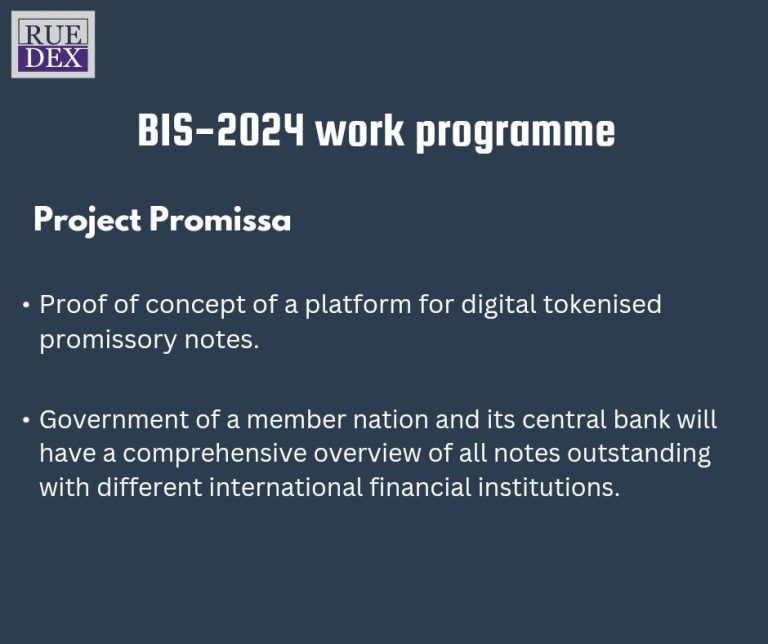
Project Promissa, a collaborative initiative involving the BIS Innovation Hub Swiss Centre, the Swiss National Bank, and the World Bank, seeks to develop a proof of concept (PoC) for a platform dedicated to digital “tokenized” promissory notes. The International Monetary Fund is involved in the project as an observer.

By leveraging distributed ledger technology, Project Promissa aims to streamline note management and establish a single, authoritative source for all involved parties throughout the lifecycle of the notes. This approach ensures that both the government of a member nation and its central bank, acting as custodians, gain a comprehensive overview of outstanding notes across various international financial institutions. Similarly, international financial institutions, including multilateral development banks, gain unified visibility into outstanding notes held by different central banks. The sheer volume of promissory notes across global financial institutions, exemplified by entities like the International Bank for Reconstruction and Development (IBRD) and the International Development Association (IDA) within the World Bank, underscores the significance of this initiative.

The ultimate objective is to finalize the PoC and undergo testing by early 2025. While initially focusing on simplifying the management of promissory notes, Project Promissa envisions future extensions that could incorporate payments or encashments associated with such notes. This extension could involve integrating tokenized payment systems based on either private or public currencies.

In the ever-evolving landscape of global finance, the convergence of tradition and technology has given rise to groundbreaking initiatives. Project Promissa, a collaborative venture involving the BIS Innovation Hub Swiss Centre, the Swiss National Bank, and the World Bank, stands at the forefront of this intersection. This article explores the nuances of Project Promissa, an ambitious experiment aimed at digitizing promissory notes through the use of distributed ledger technology, promising to transform the way international financial institutions operate.

1.     The Current Landscape

At present, many international financial institutions, including multilateral development banks, rely on paper-based promissory notes for funding. While this system offers operational controls for member nations to fulfill their financial commitments, the manual handling of paper notes poses operational challenges and inefficiencies.

Project Promissa

2.     Enter Project Promissa

Project Promissa is a pioneering initiative that seeks to address these challenges by creating a proof of concept (PoC) for a platform dedicated to digital “tokenized” promissory notes. The project, supported by the World Bank and observed by the International Monetary Fund, aims to leverage distributed ledger technology to simplify note management and provide a single, authoritative source of truth for all involved parties.

3.     Key Objectives

  • Digitization for Efficiency

Streamlining the handling of promissory notes through digitization to eliminate inefficiencies associated with paper-based processes.

  • Comprehensive Overview

Providing member nations and their central banks, acting as custodians, with a comprehensive overview of outstanding notes with different international financial institutions.

  • Uniform Visibility

Offering international financial institutions, including multilateral development banks, a unified visibility of outstanding notes held by different central banks.

  • Proof of Concept and Testing

Aiming to complete the PoC and testing phase by early 2025, demonstrating the feasibility and effectiveness of the digital tokenized approach.

4.     Future Extensions

While the initial focus of Project Promissa is on simplifying the management of promissory notes, the project envisions future extensions. These extensions could include incorporating payments or encashments associated with such notes, integrating tokenized payment systems based on private or public currencies.

5.     Conclusion

We explained Project Promissa in a broader aspect.It stands as a testament to the transformative power of innovative technologies in reshaping the financial landscape. By digitizing promissory notes, this collaborative initiative strives to enhance operational efficiency, provide transparency, and pave the way for potential future developments in the realm of international financial instruments. As the project progresses toward its ambitious goals, it holds the promise of setting new standards for the digitization and management of financial instruments on a global scale.

Cross-Border CBDC Business-to-Business Payments

0

In the ever-evolving landscape of global finance, the advent of Central Bank Digital Currencies (CBDCs) has emerged as a transformative force, reshaping the way nations conceptualise and engage in cross-border business-to-business (B2B) payments. Central Bank Digital Currencies represent a fundamental departure from traditional fiat currencies, harnessing the power of blockchain technology to digitise and decentralise the issuance and management of money. The introduction of CBDCs signifies a technological leap forward and a strategic move by central banks to address longstanding inefficiencies in cross-border transactions.

Central to this paradigm shift is the understanding that traditional cross-border B2B payments have long been fraught with challenges, from excessive transaction costs to the cumbersome nature of intermediaries facilitating these transactions. CBDCs, by design, hold the promise of facilitating these challenges, offering a digital alternative that is faster, more cost-effective, and inherently transparent. As we delve into the dynamics of cross-border CBDC B2B payments, it becomes evident that this emerging financial landscape is not merely a technological upgrade but a catalyst for broader economic transformations.

The primary objective of CBDCs is to modernize and streamline financial systems, enhancing transaction efficiency while simultaneously reducing the costs associated with conventional payment methods. CBDCs are centralized and typically possess legal tender status unlike their cryptocurrency counterparts, thus integrating seamlessly with existing monetary frameworks. This integration is critical as CBDCs seek to become a foundational element in facilitating international trade, offering businesses an unprecedented avenue for conducting cross-border transactions swiftly, securely, and cost-efficiently. This article aims to dissect the intricacies of cross-border CBDC B2B payments, shedding light on this disruptive financial phenomenon’s advantages, challenges, and prospects.

  • Understanding Central Bank Digital Currencies (CBDCs):

Central Bank Digital Currencies (CBDCs) represent a pivotal evolution in the monetary landscape, transcending traditional currency issuance and management forms. Unlike conventional physical cash or digital money held in commercial banks, CBDCs are a digital representation of a nation’s fiat currency, directly issued and regulated by the central bank. At the heart of this innovation lies the integration of blockchain technology, a decentralized and secure ledger system that underpins the creation, distribution, and tracking of CBDCs. The introduction of CBDCs signifies a departure from traditional monetary frameworks, offering central banks unprecedented control and oversight in the digital realm.

One of the distinguishing features of CBDCs is their role as legal tender, providing individuals and businesses with a digital equivalent of physical currency recognized by the government. The issuance of CBDCs by central banks is not driven by a desire to replace traditional currencies but rather to complement them, fostering a parallel digital economy. This dual-currency approach allows for increased financial inclusivity and accessibility, catering to a technologically adept demographic while maintaining the stability and legitimacy associated with national fiat currencies.

Moreover, CBDCs offer a strategic response to the rapidly evolving landscape of financial transactions. By leveraging blockchain technology, CBDCs enable direct, peer-to-peer transactions with enhanced speed and security. The decentralization inherent in blockchain minimizes the need for intermediaries in the payment process, contributing to a more efficient and cost-effective system. As we delve deeper into the dynamics of CBDCs, it becomes apparent that their implementation goes beyond mere technological modernization; it catalyzes redefining the role of central banks in the digital age and reshaping the nature of cross-border B2B payments on a global scale.

  • The Evolution of Cross-Border Payments

Traditional cross-border payments have long been synonymous with challenges, marked by inefficiencies that stem from complex, multi-step processes involving various intermediaries. The advent of Central Bank Digital Currencies (CBDCs) heralds a new era in the evolution of cross-border payments, promising to alleviate longstanding issues and redefine the dynamics of international transactions. The traditional model, characterized by slow processing times, high transaction costs, and limited transparency, has prompted the exploration of innovative solutions, and CBDCs emerge as a ground breaking response to these challenges.

At the heart of the evolution lies the recognition that the traditional cross-border payment infrastructure is ripe for transformation. CBDCs, built upon the principles of blockchain technology, facilitate seamless and direct transactions between parties, eliminating the need for multiple intermediaries. This streamlined approach accelerates payment settlements and enhances the overall efficiency of cross-border business-to-business (B2B) payments. As the global economy becomes increasingly interconnected, the evolution of cross-border payments through CBDCs signifies a shift towards a more inclusive, agile, and responsive financial ecosystem.

  • Advantages of Cross-Border CBDC B2B Payments

The adoption of Central Bank Digital Currencies (CBDCs) in cross-border business-to-business (B2B) payments heralds a myriad of advantages, promising to redefine the efficiency, cost-effectiveness, and security of international transactions. As businesses navigate the complexities of global trade, the advantages presented by CBDCs emerge as a transformative force, offering a range of benefits that have the potential to reshape the landscape of cross-border commerce.

  • Efficiency and Speed:

At the forefront of the advantages is the unprecedented efficiency and speed that CBDCs bring to cross-border transactions. Leveraging blockchain technology, CBDCs facilitate direct, peer-to-peer transactions, eliminating the need for intermediaries and streamlining the settlement process. This accelerates payment processing times and ensures that businesses can engage in real-time transactions, fostering a more agile and responsive global trade ecosystem.

  • Cost Reduction:

Traditional cross-border payments often entail a convoluted network of intermediaries, each charging fees for their services. CBDCs offer a direct, decentralized alternative, reducing the overall costs of cross-border B2B transactions. By minimizing intermediary fees and cutting out unnecessary layers in the payment process, businesses stand to benefit from significant cost savings, enhancing the overall financial viability of international trade.

  • Transparency and Security:

The integration of blockchain technology in CBDCs ensures an unprecedented level of transparency and security in cross-border payments. Every transaction is recorded on a tamper-proof and immutable ledger, providing a verifiable and traceable history. This mitigates the risk of fraud and enhances the overall security of B2B transactions, instilling confidence in businesses engaged in cross-border trade.

  • Currency Conversion Simplification:

CBDCs have the potential to simplify currency conversions in cross-border transactions. As CBDCs are digital representations of national fiat currencies, businesses can engage in transactions without the need for complex and costly currency conversion processes. This simplification reduces friction in international trade, making it more accessible for businesses of varying sizes and resources.

In essence, the advantages of cross-border CBDC B2B payments extend far beyond mere transactional improvements. They pave the way for a more interconnected, efficient, and cost-effective global trade environment, offering businesses unprecedented opportunities to thrive in an increasingly digital and borderless economy. As we delve deeper into these advantages, it becomes evident that CBDCs are not just a technological innovation; they represent a fundamental shift in the dynamics of cross-border commerce, unlocking new possibilities for businesses on the international stage.

  • International Trade Facilitation

Central Bank Digital Currencies (CBDCs) emerge as a linchpin in the facilitation of international trade, ushering in a new era of connectivity and efficiency in cross-border business-to-business (B2B) transactions. As the global economy becomes increasingly interdependent, the role of CBDCs in international trade takes center stage, presenting a myriad of opportunities to streamline processes, reduce barriers, and enhance the overall landscape of global commerce.

Seamless Cross-Border Transactions:

CBDCs pave the way for seamless cross-border transactions, eliminating the friction associated with traditional payment methods. The digital nature of CBDCs, coupled with their direct peer-to-peer transaction capabilities, ensures that businesses can engage in international trade with unprecedented ease. This seamless experience contributes to a more fluid exchange of goods and services across borders, fostering a conducive environment for businesses to explore new markets and partnerships.

Cost-Efficient Global Commerce:

The cost efficiencies inherent in CBDCs play a crucial role in making international trade more accessible to businesses of all sizes. By reducing transaction costs associated with cross-border B2B payments, CBDCs level the playing field, allowing small and medium-sized enterprises (SMEs) to participate more actively in global commerce. This democratization of international trade contributes to economic growth and diversification on a global scale.

Elimination of Currency Conversion Barriers:

One of the significant hurdles in international trade involves navigating complex currency conversion processes. CBDCs, representing digital versions of national fiat currencies, eliminate the need for extensive and costly currency conversions. This simplification of currency transactions reduces uncertainty and mitigates financial risks, providing businesses with a more straightforward and transparent platform for conducting cross-border trade.

Enhanced Trade Financing:

CBDCs can also enhance trade financing by providing a secure and transparent means for businesses to access capital. The traceability of transactions on the blockchain ensures that financial institutions can assess creditworthiness more accurately, thereby facilitating smoother trade finance processes. This, in turn, contributes to the growth of international trade by providing businesses with the necessary financial resources to engage in cross-border transactions.

Real-Time Settlements:

The efficiency of CBDCs allows for real-time settlements in cross-border transactions. This real-time aspect is particularly advantageous in international trade, where timely payments and settlements are crucial. By minimizing delays associated with traditional banking systems, CBDCs empower businesses to operate with agility in the global market, reducing the financial risks associated with prolonged payment processing times.

In essence, the facilitation of international trade through CBDCs goes beyond transactional enhancements; it signifies a shift towards a more connected and dynamic global economic landscape. As we explore the implications of CBDCs in international trade facilitation, it becomes evident that these digital currencies act as catalysts for economic growth, promoting collaboration, and unlocking new possibilities for businesses navigating the complexities of the international marketplace.

  • Regulatory Considerations

The widespread adoption of Central Bank Digital Currencies (CBDCs) in cross-border business-to-business (B2B) payments introduces a pressing need for robust regulatory frameworks. As nations and financial institutions delve into implementing these innovative digital currencies, regulatory considerations become paramount to ensure the stability, security, and legality of transactions on the global stage.

Introducing CBDCs requires clear governance structures and compliance frameworks to safeguard against potential misuse. Regulatory authorities must define the legal status of CBDCs, ensuring they adhere to existing financial regulations. It involves addressing issues related to anti-money laundering (AML) and combating the financing of terrorism (CFT), establishing clear guidelines on the permissible uses of CBDCs, and delineating the responsibilities of businesses and financial institutions involved in cross-border B2B transactions.

Achieving interoperability between CBDC systems and traditional financial infrastructures is a critical regulatory consideration. Standardizing protocols and formats for cross-border CBDC transactions ensures a seamless value exchange between disparate systems. Regulators must collaborate on establishing international standards to facilitate interoperability, enabling businesses to transact smoothly across borders without being hindered by incompatible systems. The digitization of cross-border payments through CBDCs necessitates stringent data privacy and security regulations. As transactions occur on blockchain networks, regulators must establish protocols to protect sensitive information. This involves defining data ownership, implementing encryption standards, and outlining cybersecurity measures to prevent unauthorized access, ensuring that businesses and individuals can engage in cross-border transactions with confidence in the security of their financial data. Regulatory coordination across jurisdictions is paramount given the global nature of cross-border transactions. Harmonizing regulatory approaches among nations facilitates a cohesive framework for businesses engaging in CBDC B2B payments. This coordination involves international agreements and collaborations to address potential conflicts in regulations, ensuring a consistent and predictable regulatory environment for cross-border transactions.

Regulatory considerations must extend to safeguarding the interests of consumers engaging in cross-border transactions using CBDCs. Establishing consumer protection measures involves defining dispute resolution mechanisms, ensuring transparency in transaction processes, and mitigating risks associated with digital currencies. Robust consumer protection regulations instill confidence in businesses and individuals alike, fostering a secure environment for cross-border trade.

As the issuers of CBDCs, central banks play a pivotal role in ensuring the stability of the financial system. Regulatory frameworks should delineate the oversight responsibilities of central banks, outlining their role in monitoring and mitigating risks associated with CBDCs. This involves mechanisms for responding to systemic issues, managing liquidity, and maintaining the overall integrity of the financial ecosystem.

  • Challenges and Concerns

While the prospect of integrating Central Bank Digital Currencies (CBDCs) into the cross-border business-to-business (B2B) payments landscape holds immense promise, a range of challenges and concerns must be addressed to ensure a smooth transition. As nations and businesses navigate the complexities of adopting CBDCs on a global scale, it becomes imperative to critically examine and mitigate the potential hurdles that may impede their widespread acceptance.

Interoperability Issues:

One of the foremost challenges in the adoption of CBDCs for cross-border B2B payments is the potential lack of interoperability between different CBDC systems. Ensuring seamless transactions across diverse digital currency ecosystems and traditional financial infrastructures requires standardized protocols. The absence of universally accepted standards could lead to fragmentation, hindering the efficiency gains expected from CBDCs in facilitating international trade.

Cybersecurity Risks:

The digitization of cross-border payments through CBDCs introduces heightened cybersecurity concerns. Blockchain, while inherently secure, is not immune to cyber threats. The decentralized nature of CBDCs also necessitates robust measures to protect against hacking, fraud, and other malicious activities. Establishing comprehensive cybersecurity frameworks is imperative to instill confidence in businesses and consumers engaging in cross-border transactions using CBDCs.

 Regulatory Divergence:

The lack of standardized regulatory frameworks across jurisdictions poses a significant concern. Divergent regulatory approaches may lead to inconsistencies in how CBDCs are treated, hindering the establishment of a cohesive global landscape. Harmonizing regulations and fostering international collaboration among regulatory authorities are essential to address these concerns and create a conducive environment for cross-border B2B transactions.

 Privacy Issues:

The transparent and immutable nature of blockchain technology raises privacy concerns regarding the exposure of transaction details. Striking a balance between transparency and individual privacy is crucial. Regulatory frameworks must provide clear guidelines on data protection, ensuring that sensitive information remains secure while still adhering to necessary transparency requirements.

 Consumer Adoption and Education:

The widespread adoption of CBDCs relies heavily on the acceptance and understanding of businesses and consumers. Lack of awareness and education about the benefits and usage of CBDCs may lead to slow adoption. Initiatives to educate stakeholders, including businesses, financial institutions, and the general public, are essential to facilitate a smooth transition to CBDCs and mitigate resistance to change.

Operational Resilience:

The operational resilience of the CBDC infrastructure is a critical concern. Issues such as system downtimes, technological glitches, or other disruptions could have far-reaching consequences for cross-border B2B payments. Developing robust and redundant systems, along with comprehensive contingency plans, is crucial to ensure the continuous functionality of CBDC networks.

Central Bank’s Role and Monetary Policy:

The introduction of CBDCs may necessitate a reevaluation of the central bank’s role and monetary policy. Balancing the benefits of CBDCs with potential impacts on monetary stability, inflation, and interest rates requires careful consideration. The central bank must adapt its policy frameworks to accommodate the unique characteristics of CBDCs while maintaining overall economic stability.

Conclusion

The evolution of Central Bank Digital Currencies (CBDCs) in the realm of cross-border business-to-business (B2B) payments marks a transformative juncture in the global financial landscape. As nations and businesses grapple with the opportunities and challenges presented by CBDCs, the journey from conceptualization to implementation underscores the profound impact these digital currencies can have on international trade, financial ecosystems, and the role of central banks.

The advantages of cross-border CBDC B2B payments are evident, promising unparalleled efficiency, cost-effectiveness, and security in international transactions. From streamlining processes to fostering a more inclusive global trade environment, CBDCs represent a catalyst for economic growth and collaboration on a scale previously unseen. The prospect of seamless cross-border transactions, cost-efficient global commerce, and enhanced trade financing positions CBDCs as a cornerstone for businesses navigating the intricacies of the international marketplace.

However, as with any transformative technology, the path to widespread adoption of CBDCs is not without its challenges and concerns. Interoperability issues, cybersecurity risks, and regulatory divergence present formidable hurdles that require collaborative and adaptive solutions. The successful integration of CBDCs into the cross-border B2B payments landscape hinges on the establishment of robust regulatory frameworks, standardized protocols, and comprehensive cybersecurity measures.

The consideration of challenges such as data privacy, consumer adoption, and operational resilience is paramount to ensure that the promises of CBDCs are realized without compromising the integrity of financial systems. Addressing these concerns requires a delicate balance between innovation and regulatory oversight, emphasizing the need for international collaboration to harmonize approaches and foster a consistent regulatory environment.

In conclusion, the journey towards cross-border CBDC B2B payments represents not only a technological evolution but a paradigm shift in the way nations and businesses conduct international trade. The advantages, challenges, and regulatory considerations associated with CBDCs collectively shape the narrative of a future where cross-border transactions are more seamless, inclusive, and secure. As the global financial ecosystem continues to evolve, the successful integration of CBDCs hinges on the collective efforts of governments, central banks, regulatory authorities, and industry stakeholders to navigate challenges, capitalize on opportunities, and usher in a new era of international trade facilitation.


Bank of England and HM Treasury address feedback on digital pound consultation

0

The Bank of England and HM Treasury have released their response to the consultation on a digital pound, which was initiated in February 2023. It should be noted that no final decision has been made to proceed with the implementation of a digital pound, also known as a central bank digital currency (CBDC). The focus will now shift towards the design phase, where the feasibility and potential design options will be explored. This analysis will examine how a digital pound could be utilized within the UK economy, offering increased convenience, choice, and innovation for individuals and businesses engaging in everyday transactions. Additionally, this work will contribute to enhancing the UK’s position as a competitive global leader in the finance sector. The feedback received from various industries and organizations was predominantly supportive of the proposed design outlined in the 2023 Consultation Paper. However, some respondents expressed concerns regarding the impact of a digital pound on access to physical cash, user privacy, and control over their finances.

Read more

PHP Code Snippets Powered By : XYZScripts.com